Why Tennessee’s Karst and Variable Soil Conditions Make Traditional Utility Locating Risky
Tennessee’s underground environment is far more complex than many contractors expect. In fact, East and Middle Tennessee contain some of the most unpredictable subsurface conditions in the Southeast. Limestone bedrock, karst terrain, expansive clay, silt soils, and shifting groundwater conditions can all exist within the same project corridor. As a result, traditional utility locating methods […]
How Ground Penetrating Radar Works Across U.S. Soil Conditions
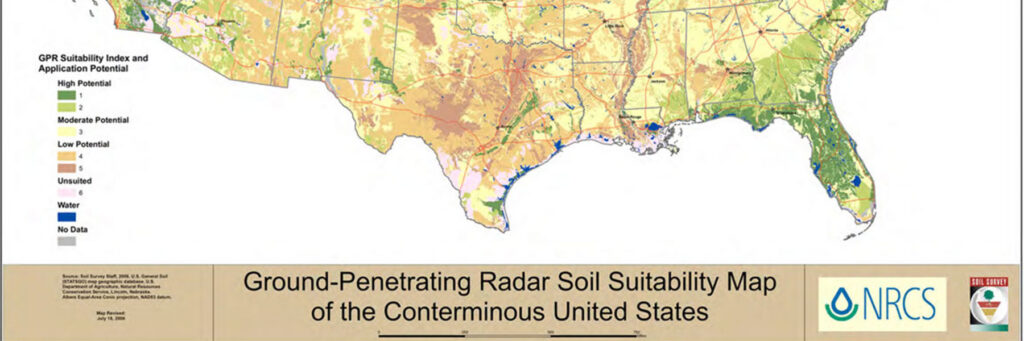
Quick summary for busy readers GPR performs best in low‑conductivity, dry, and homogeneous soils such as dry sands, gravels, and frozen ground. It struggles in high‑conductivity, clay‑rich, saline, or mineralized soils because those conditions absorb or scatter radar energy. Choose antenna frequency to match target size and depth: higher frequency for shallow detail, lower frequency for deeper penetration. Always […]
Ground Penetrating Radar Services: Smarter Project Planning
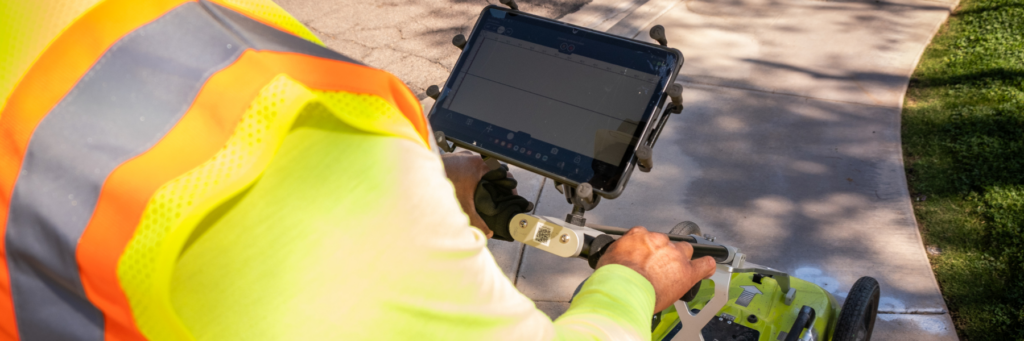
Ground Penetrating Radar services play a critical role in smarter project planning by giving teams clear visibility into subsurface conditions before excavation begins. Although planning often begins well before construction, many teams still make early decisions without reliable information about what lies beneath the surface. GPR closes that information gap by delivering accurate subsurface data […]