Contractors make costly mistakes when they core drill into concrete without first identifying what lies beneath the surface. Concrete slabs often contain reinforcing steel (rebar), post-tension cables, electrical conduits, and plumbing lines just inches below the surface. When crews accidentally strike these elements, they create serious safety hazards, cause structural damage, and trigger expensive project delays.
Concrete scanning provides a clear solution. Using non-destructive testing methods like Ground Penetrating Radar (GPR), technicians help contractors, engineers, and facility managers locate embedded objects before drilling begins. This process eliminates uncertainty, improves jobsite safety, and allows crews to core drill with accuracy and efficiency.
In this guide, we explain what concrete scanning involves, how GPR technology works, and why contractors rely on it to core drill safely without damaging rebar or post-tension cables.
What Is Concrete Scanning?
Concrete scanning is a non-destructive inspection process that detects and maps objects embedded within concrete structures. Contractors schedule concrete scanning services before core drilling, saw cutting, anchoring, or renovation work to prevent damage and delays.
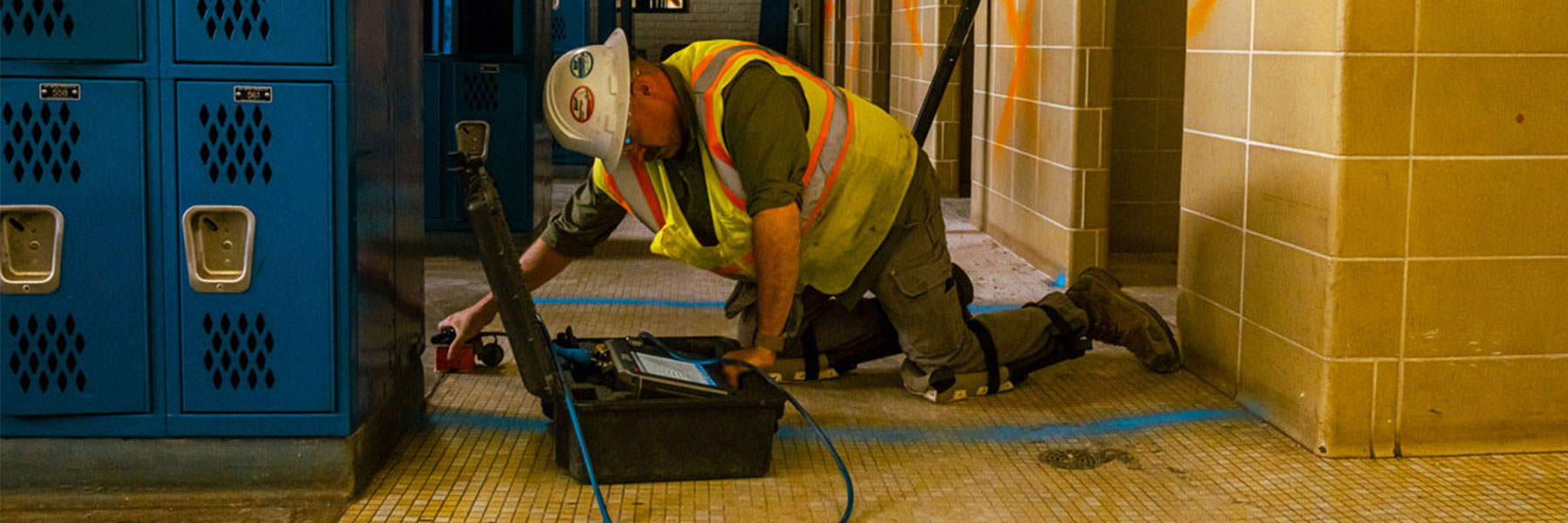
Technicians use Ground Penetrating Radar (GPR) to scan slabs, walls, beams, and columns and identify the location and depth of rebar, post-tension cables, conduits, piping, and other embedded features. Instead of relying on outdated drawings or assumptions, crews see exactly what the concrete contains.
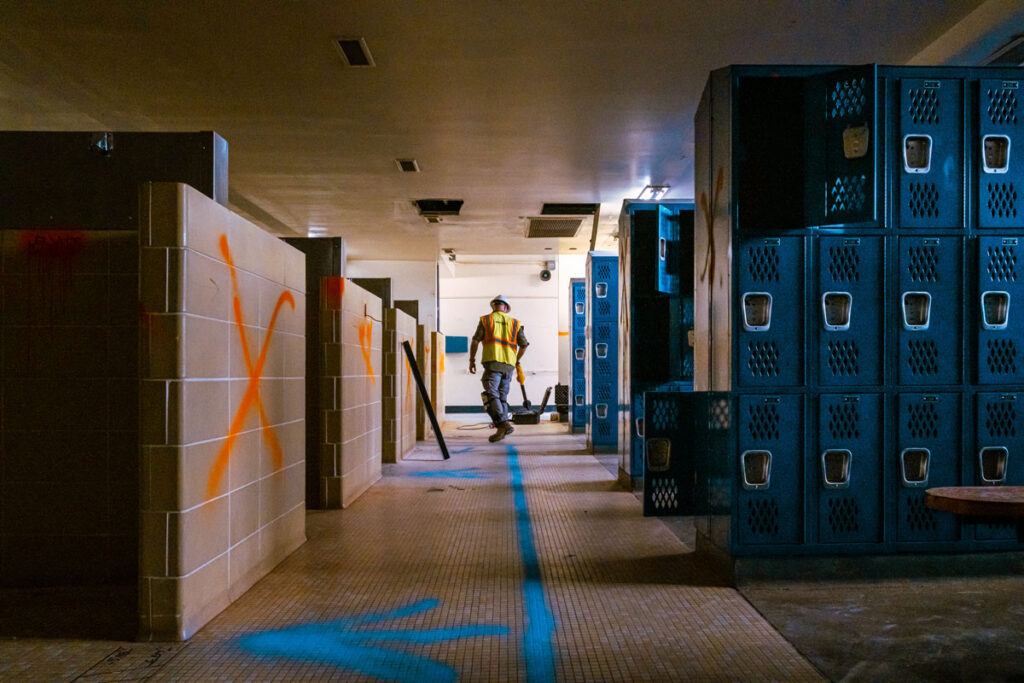
After completing the scan, technicians mark the results directly on the slab surface so drilling crews can clearly identify safe core drilling zones and restricted areas.
Why Concrete Scanning Is Critical Before Core Drilling
Core drilling demands precision, and skipping concrete scanning increases risk. When crews drill into unknown conditions, they jeopardize safety, weaken structural components, and stall the project.
For instance, when workers cut through rebar, they reduce the slab’s load-carrying capacity. When they strike electrical conduits or plumbing lines, they cause service interruptions, flooding, and costly emergency repairs. The most danger occurs when a crew hits a post-tension cable.
Post-tension cables contain steel tendons stretched under extremely high tension. If a crew cuts a cable, it can snap violently, release stored energy, and damage the slab. By locating post-tension cables before drilling, concrete scanning enables crews to choose safe drilling locations or request an engineer’s review.
Concrete scanning reveals hidden obstructions before work starts, so teams protect workers, equipment, and the structural integrity of the project from the very beginning.
Rebar vs. Post-Tension Cables: What’s Inside Your Concrete?
Understanding why concrete scanning matters starts with knowing the difference between rebar and post-tension cables.
Rebar consists of reinforcing steel placed inside concrete to increase tensile strength. Contractors usually arrange it in uniform grids or mats. Drilling through rebar can damage drill bits and reduce structural performance, but it does not release stored energy.
Post-tension cables work very differently. Crews install these steel tendons inside ducts and tension them after the concrete cures. The cables may curve or vary in spacing across a slab. Cutting a post-tension cable during core drilling can release tension suddenly, causing cable recoil, concrete spalling, and serious injury hazards.
Because post-tension cable layouts often differ from construction drawings, crews rely on concrete scanning to confirm their exact location and depth before drilling.
Ground Penetrating Radar (GPR)
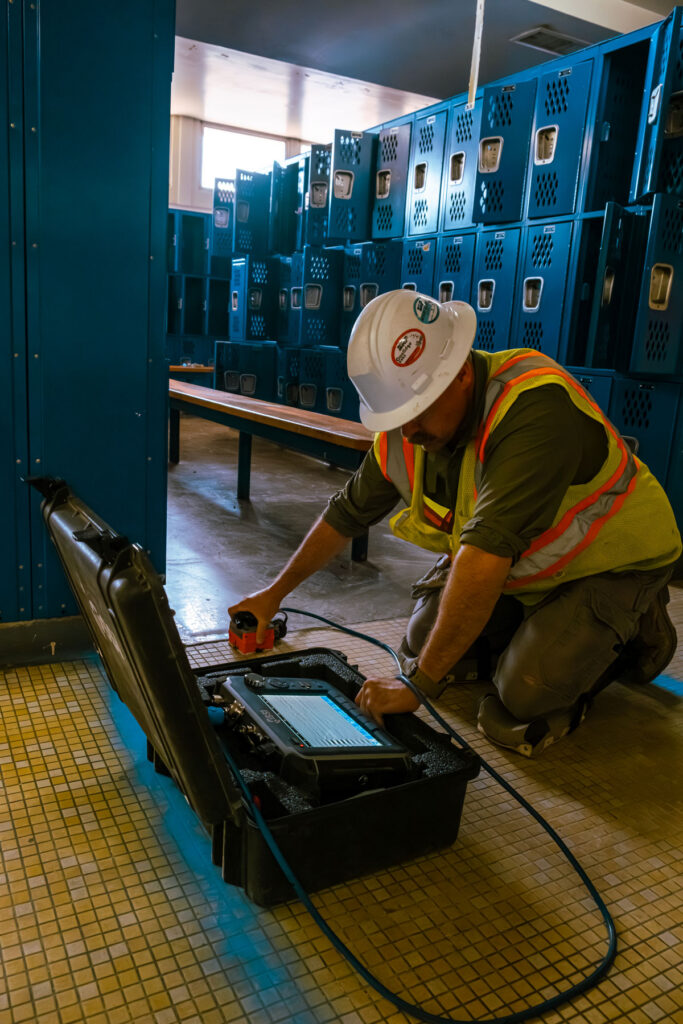
Ground Penetrating Radar is the most widely used technology for concrete scanning. A GPR antenna sends electromagnetic signals into the concrete and records reflections from embedded materials. These reflections allow trained technicians to identify rebar, post-tension cables, conduits, and voids.
Additionally, GPR concrete scanning works on both horizontal and vertical surfaces and provides immediate results on-site. Depth information is also captured, which is critical for planning safe core drilling paths.
When Additional Scanning Methods Are Used
In some cases, such as thick concrete slabs, heavily reinforced structures, or complex building elements, technicians use additional non-destructive testing methods alongside GPR to improve accuracy. Based on site conditions, experienced concrete scanning professionals determine the most appropriate approach.
Our Concrete Scanning Process Before Core Drilling
Review Scope and Requirements
The concrete scanning process begins with a review of the drilling scope and project requirements. Scan areas are prepared and systematically surveyed to ensure full coverage.
Data collection
Technicians perform multiple GPR passes over the concrete to capture clear, reliable data. The collected information is interpreted in real time to determine object type, depth, and alignment.
Begin of Drilling phase
Once scanning is complete, embedded items are clearly marked on the concrete surface. Safe drilling zones are identified so core drilling crews can proceed with confidence. We may also provide scan documentation to support engineering review or project coordination.
Who Needs Concrete Scanning?
Concrete scanning services help:
- General contractors
- Concrete coring contractors
- MEP trades
- Structural engineers
- Facility managers
- Property owners
Any project that involves drilling, cutting, anchoring, or renovating concrete benefits from scanning. Whether you’re planning a single penetration or multiple core drill locations, concrete scanning delivers clear insights and reduces risk.
Why Skipping Concrete Scanning Can Lead to Costly Consequences
Unfortunately, contractors who skip concrete scanning often encounter avoidable problems. Cutting rebar can weaken concrete and require engineering repairs. Striking utilities can shut down operations and delay schedules. Damaging a post-tension cable can trigger emergency responses, structural evaluations, and significant liability.
Compared to the potential cost of repairs and delays, concrete scanning is a small investment that delivers substantial protection.
Best Practices for Safe Core Drilling After Concrete Scanning
Concrete scanning is most effective when combined with proper drilling procedures. Scanning should be completed before any core drilling begins, regardless of hole size. Drill operators should review scan markings and understand which areas are restricted.
Both the horizontal location and depth of embedded items must be considered when selecting drilling locations. Core drilling near post-tension cables should always be reviewed by a structural engineer.
Maintaining clear communication between scanning technicians, engineers, and drilling crews helps ensure scanning data is used correctly throughout the project.
Conclusion: Concrete Scanning Makes Core Drilling Safer
Modern construction and renovation projects rely on concrete scanning as a critical step. Scanning identifies rebar, post-tension cables, and embedded utilities before core drilling, helping teams reduce risk, improve safety, and protect structural integrity.
When your project includes core drilling, start with concrete scanning. Understanding what lies inside the concrete lets you drill safely, avoid costly mistakes, and keep your project on schedule.

Drill Confidently, Scan First!
Avoid costly mistakes by locating rebar, post-tension cables, and hidden utilities before drilling. Concrete scanning protects your crew, your tools, and your project, ensuring safe, precise core drilling every time.
Get started with a professional scan today.