Digging blindly on a job site is a high-stakes gamble. Without precise utility verification, a single misplaced strike can instantly trigger compounding project delays, budget-draining repairs, and severe safety hazards for your crew and the surrounding community.
To take the guesswork out of the equation, proactive contractors, engineers, and municipalities rely on advanced, non-destructive digging methods like potholing and slot trenching before any heavy excavation begins.
While both techniques are engineered to safely expose underground infrastructure, they serve distinctly different operational purposes. Understanding when to use potholing versus slot trenching is the key to keeping your project accurate, safe, and on schedule.
At Safe Site, we specialize in professional hydro excavation, utility locating, utility mapping, and Subsurface Utility Engineering (SUE) across a wide range of industries. Because our teams navigate complex soil conditions and high-risk environments every day, we partner with you to analyze your site and select the absolute best excavation strategy for your specific needs.
What Is Potholing?
Let’s start with the first digging method: potholing.
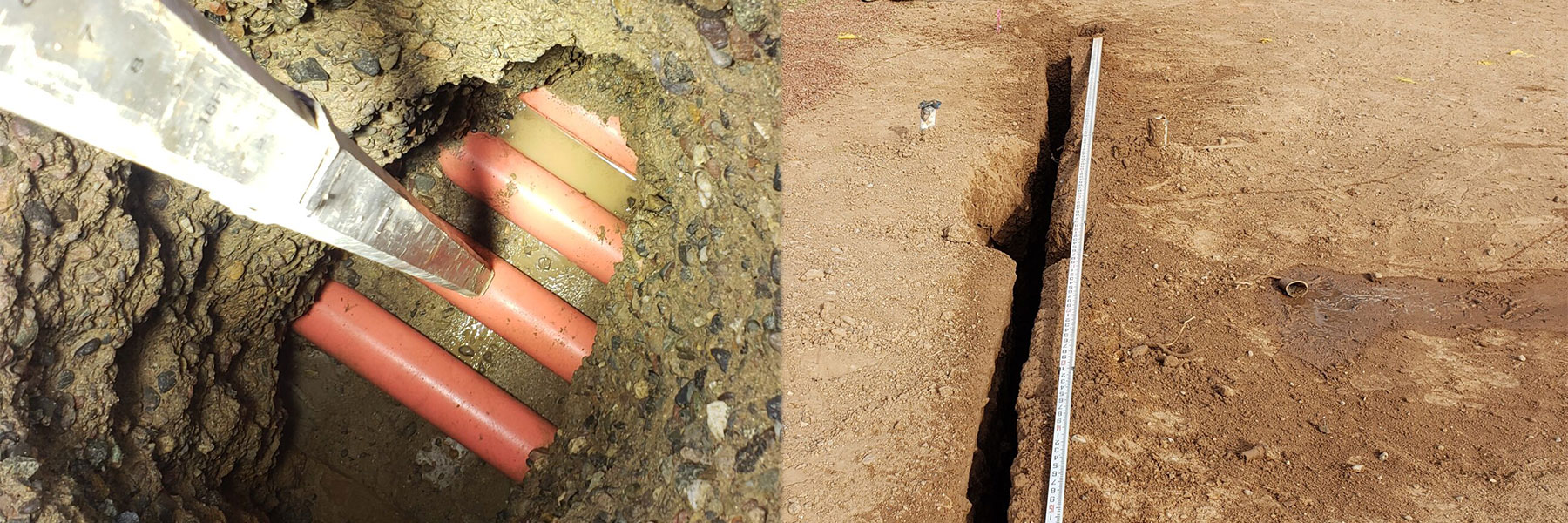
Potholing is a non-destructive excavation method used to expose a specific underground utility at a precise location. Crews typically use hydro excavation equipment that combines pressurized water and vacuum systems to safely remove soil without damaging buried infrastructure.
In most cases, potholing creates a small, targeted hole that confirms:
- Utility depth
- Utility size
- Exact utility location
- Utility type
- Crossing conflicts
Because the excavation area remains small, potholing minimizes surface disruption while improving job site safety.
Common Uses for Potholing
Contractors often use potholing before:
- Directional drilling
- Pole installation
- Sign installation
- Utility crossings
- Excavation projects
- Fiber optic construction
- Pipeline projects
- Roadwork and infrastructure upgrades
For example, before installing a new water line, crews may pothole several marked utility crossings to verify exact depths and avoid striking existing gas or electric lines.
What Is Slot Trenching?
Slot trenching uses hydro excavation to create a narrow, continuous trench that exposes underground utilities over a longer distance.
Instead of exposing a single point, slot trenching uncovers an entire utility path. This method allows crews to inspect underground infrastructure continuously while maintaining a safer and more controlled excavation process.
Slot trenches are usually narrow but can extend for several feet or even hundreds of feet, depending on project requirements.
Common Uses for Slot Trenching
Slot trenching works best for projects that require:
- Continuous utility exposure
- Utility mapping
- Pipeline inspection
- Utility relocation
- Congested utility corridor investigations
- Subsurface Utility Engineering (SUE)
- Trenchless construction support
For example, during a roadway expansion project, engineers may need to verify the full path of existing telecom and gas lines before redesigning utility corridors. In that situation, slot trenching provides much more visibility than isolated potholes.
Potholing vs. Slot Trenching: Key Differences
| Comparison Feature | Potholing | Slot Trenching |
|---|---|---|
|
1. Excavation Size |
Focuses on a single, isolated location with minimal excavation footprint. |
Exposes a longer, continuous section of underground utilities through a long, narrow trench. |
|
2. Project Purpose |
Best for verifying specific, predetermined utility conflict points. |
Best for investigating full utility routes and continuous underground infrastructure. |
|
3. Surface Disruption |
Creates very low surface disturbance because crews only dig small, targeted holes. |
Disturbs a larger surface area linearly, though it remains far less invasive than traditional mechanical trenching. |
Which Method Is Safer?
Both potholing and slot trenching improve excavation safety significantly compared to mechanical digging methods.
Hydro excavation technology reduces the risk of:
- Utility strikes
- Gas leaks
- Electrical damage
- Service interruptions
- Worker injuries
- Expensive emergency repairs
However, the safest option depends on the project scope. If crews only need to confirm utility depth at a single crossing, potholing often provides the safest and most efficient solution. On the other hand, if teams need continuous utility exposure across an entire corridor, slot trenching delivers better visibility and reduces uncertainty.
At Safe Site, our technicians evaluate soil conditions, utility congestion, project goals, and excavation risks before recommending the right method.
Why Hydro Excavation Matters
Both potholing and slot trenching frequently rely on hydro excavation because it offers a safer alternative to traditional excavation equipment.
Unlike mechanical digging, hydro excavation uses water pressure to loosen soil while a vacuum system removes debris immediately.
This process helps crews:
- Prevent underground utility damage
- Improve excavation precision
- Reduce restoration costs
- Minimize traffic disruption
- Work efficiently in congested utility areas
- Increase overall job site safety
Additionally, hydro excavation performs exceptionally well in sensitive environments where precision matters most.
When to Choose Slot Trenching
Slot trenching is the superior option when you need to see the bigger picture rather than a single data point. Opt for this method when your project calls for continuous long-distance exposure to uncover extended stretches of underground infrastructure in one sweep. It is highly effective for utility corridor investigations where multiple lines run parallel or cross over each other, as well as for comprehensive inspections to physically assess the structural integrity of an extended pipeline or conduit. Furthermore, slot trenching provides the continuous visual data needed for advanced mapping and subsurface utility engineering (SUE) support services, making it indispensable for relocation planning before designing and moving existing infrastructure.
Because teams can visually confirm a continuous utility path, slot trenching eliminates guesswork and prevents catastrophic strikes on complex, large-scale civil projects.
Small excavation footprints make potholing ideal for tightly packed urban centers, active roadways, and high-traffic construction zones where minimizing surface disturbance is critical.
When to Choose Potholing for you project
Potholing is your go-to method when speed, budget, and a small footprint are your top priorities. It is the ideal choice for projects requiring targeted point verification to confirm the exact depth and location of a specific, pre-determined utility line. It also excels when you need rapid utility exposure to clear the way quickly with minimal setup time, or when minimal site disruption is required to keep the surrounding surface intact and traffic flowing. Additionally, potholing provides cost-effective diagnostics by lowering overall excavation expenses for isolated investigations, making it excellent for pre-construction and horizontal directional drilling (HDD) preparation to ensure a safe path before groundbreaking.
Small excavation footprints make potholing ideal for tightly packed urban centers, active roadways, and high-traffic construction zones where minimizing surface disturbance is critical.
Final Thoughts on Potholing vs. Slot Trenching
Choosing between potholing and slot trenching depends on the level of utility exposure your project requires.
If you need precise verification at a single location, potholing offers a fast and minimally invasive solution. If your project requires continuous utility visibility and infrastructure analysis, slot trenching delivers more detailed underground information.
Either way, using professional hydro excavation services helps protect underground infrastructure, improve safety, and prevent costly delays. Before your next excavation project begins, partnering with an experienced utility locating and hydro excavation team can make the difference between a smooth operation and a major underground utility issue.

Why Contractors Trust Safe Site for Potholing & Slot Trenching
Safe excavation starts with the right method and the right team. Contractors trust Safe Site for potholing and slot trenching because we expose underground utilities safely, accurately, and without unnecessary risk. At Safe Site, we use hydro excavation to verify utilities at exact points or along full corridors, depending on project needs. This means fewer surprises, fewer delays, and safer decisions before digging begins.
Don’t risk utility damage or project delays. Get expert potholing and slot trenching done right the first time.