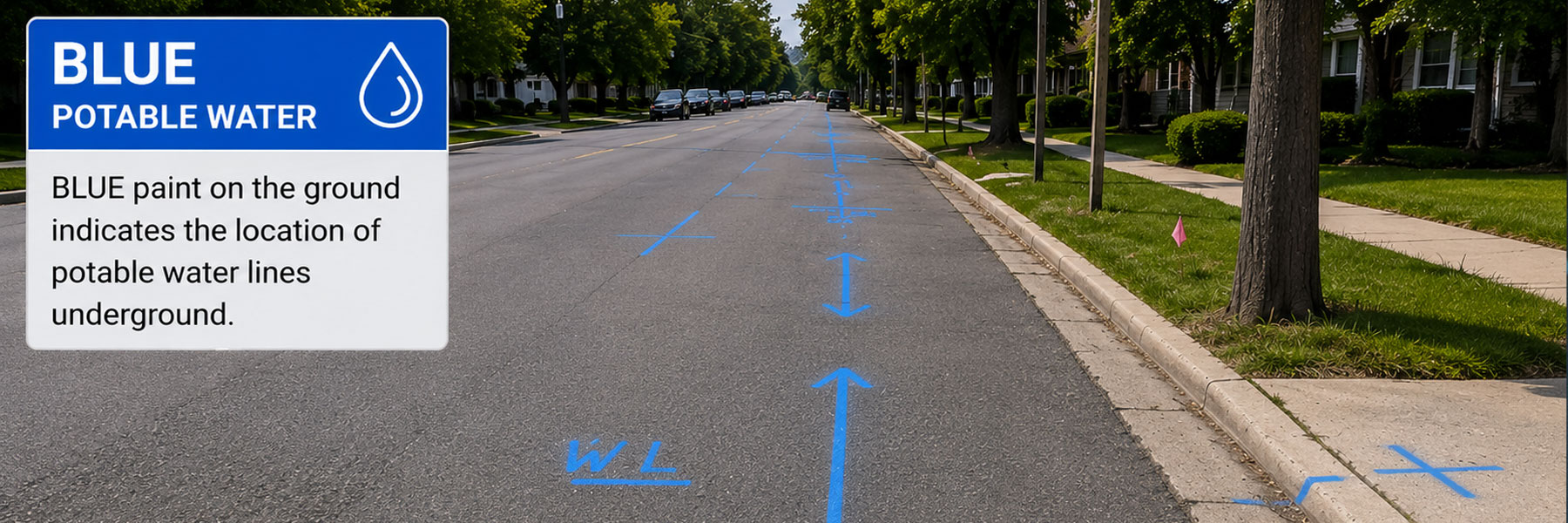
If you’ve ever seen blue spray paint or blue utility flags on a job site while walking around or in a neighborhood or while you’re driving, you may have wondered what it means. In the utility locating industry, every color has a purpose. Blue markings specifically identify potable water lines, also known as drinking water systems. Understanding these markings helps contractors, municipalities, engineers, and property owners excavate safely and avoid costly mistakes.
At Safe Site, we help clients protect underground infrastructure through professional utility locating, GPR scanning, utility mapping, and hydro excavation services. Because underground damage can create serious delays and safety risks, knowing what blue utility markings mean is essential before any excavation project begins.
What Do Blue Utility Markings Indicate?
According to the American Public Works Association (APWA) utility color code system, blue markings identify potable water lines. These lines carry clean drinking water to homes, businesses, schools, and industrial facilities. Utility locators use blue paint, flags, or stakes to show the approximate location of underground water infrastructure before digging begins.
You may see blue markings used for:
- Municipal water mains
- Residential water service lines
- Fire suppression water systems
- Commercial water connections
- Underground potable water pipes
Because water infrastructure often runs near other buried utilities, accurate locating becomes critical before trenching, drilling, grading, or excavation work starts.
Why Blue Utility Markings Matter
Blue utility markings play a major role in excavation safety and project efficiency. Damaging a buried water line can quickly lead to costly problems, including flooding, contaminated soil, service interruptions, emergency repairs, and project shutdowns.
For example, imagine a contractor beginning excavation for a new commercial foundation without properly identifying underground utilities. If the crew accidentally strikes a buried water main, the site could flood within minutes. As a result, construction delays increase, repair costs rise, and nearby businesses may temporarily lose water service.
However, when utility locating professionals accurately mark potable water lines with blue markings before excavation begins, crews can plan safer digging methods and avoid unnecessary risks.
How Professionals Locate Underground Water Lines
At Safe Site, we use advanced technology and field expertise to identify underground utilities, including potable water systems, accurately. Our crews combine multiple locating methods to improve accuracy and reduce uncertainty on active job sites.
Our process may include:
- Electromagnetic utility locating
- Ground Penetrating Radar (GPR) scanning
- Utility mapping and documentation
- Hydro excavation verification
- Subsurface utility engineering support
Because every site presents different underground conditions, experienced utility locating professionals understand how soil composition, utility congestion, and previous construction activity can affect locating accuracy. (Read the whole article about how GPR works in different US soil conditions here)
For example, imagine a contractor beginning excavation for a new commercial foundation without properly identifying underground utilities. If the crew accidentally strikes a buried water main, the site could flood within minutes. As a result, construction delays increase, repair costs rise, and nearby businesses may temporarily lose water service.
However, when utility locating professionals accurately mark potable water lines with blue markings before excavation begins, crews can plan safer digging methods and avoid unnecessary risks.
Blue Utility Markings vs. Other Utility Colors
| Meaning of Utility Marking Colors Meaning | |
|---|---|
|
Yellow |
Gas Oil, Steam, Petroleum or Gaseous Materials |
|
Orange |
Communications, Cable TV, Alarm or Signal Lines, Cables or Conduit |
|
Green |
Sewers and Drain Lines |
|
Purple |
Reclaimed Water, Irrigation and Slurry Lines |
|
Pink |
Temporary Survey Markings |
|
White |
Proposed Excavation |
Know the difference
Many contractors confuse blue markings with other underground utility colors. However, each APWA color represents a specific utility type. Understanding the difference helps crews work more safely and efficiently.
Here are some common utility marking colors:
- Red: Electric power lines
- Yellow: Gas, oil, or petroleum
- Orange: Communication and fiber optic lines
- Blue: Potable water
- Green: Sewer and drain lines
- Purple: Reclaimed water and irrigation
- Pink: Temporary survey markings
- White: Proposed excavation area
On complex projects, multiple utility colors often appear together. Therefore, accurate interpretation becomes essential before excavation starts.
We’ve written a dedicated blog article about the marking colors and their meaning.
Common Situations Where Blue Markings Appear
Blue utility markings frequently appear before:
- Road construction projects
- Water main replacements
- Commercial development
- Residential excavation
- Directional drilling projects
- Hydro excavation work
- Utility maintenance operations
In many cases, blue markings also indicate nearby fire hydrant supply lines or underground water connections servicing surrounding buildings.
Why Experience Matters in Utility Locating
Utility locating requires more than spray paint and flags. Underground infrastructure changes over time, and existing utility maps are not always accurate. In older areas, undocumented water lines or abandoned infrastructure can create major challenges during excavation.
That is why contractors, engineers, and municipalities rely on experienced locating specialists like Safe Site. Our team understands how to interpret utility signals, analyze subsurface conditions, and deliver reliable underground data that supports safer excavation planning.
Instead of relying on assumptions, we help clients make informed decisions before breaking ground.
Best Practices Around Blue Utility Markings
Before any excavation begins near blue utility markings, crews should follow proper safety procedures, including:
- Verify all utility markings before digging
- Maintain required clearance distances
- Use vacuum excavation when necessary
- Follow local excavation regulations
- Communicate utility locations with all field crews
- Request updated locates if markings become unclear
Even when utilities appear clearly marked, excavation teams should always proceed carefully around underground water infrastructure.

Trust Safe Site for Accurate Utility Locating
At Safe Site, we help clients reduce risk, improve job site safety, and avoid underground utility damage through professional locating and mapping services. From potable water systems to complex subsurface utility networks, our experienced crews deliver accurate underground data that supports safer excavation and construction projects.
Whether you are planning a commercial development, municipal infrastructure project, or private excavation work, understanding blue utility markings can help protect both your project and the critical infrastructure below the surface.
Before you dig, trust experienced utility locating professionals who understand what lies underground.