Core drilling into concrete without knowing what’s inside creates serious risks. Hidden rebar, post-tension cables, electrical conduits, and plumbing lines often sit just inches below the surface. When crews drill blindly, they can damage structural elements, create safety hazards, and cause costly delays.
Fortunately, concrete scanning eliminates that uncertainty.
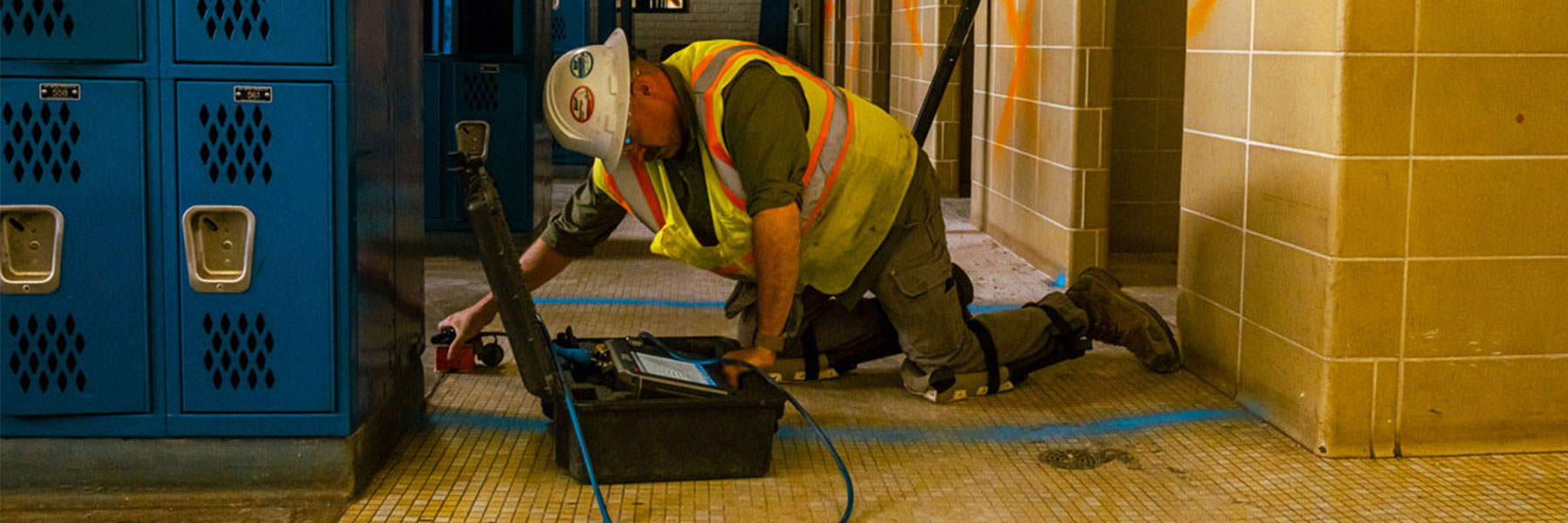
By using advanced, non-destructive technologies such as Ground Penetrating Radar (GPR), contractors can locate embedded objects before drilling begins. As a result, teams improve safety, protect structural integrity, and complete projects with confidence.
What Is Concrete Scanning?
Concrete scanning is a non-destructive process used to detect and map objects inside concrete structures before drilling, cutting, or coring.
Instead of relying on outdated drawings or assumptions, technicians use GPR to identify:
- Rebar and reinforcing steel
- Post-tension (PT) cables
- Electrical conduits
- Plumbing lines
- Voids or inconsistencies within the slab
After scanning, technicians clearly mark findings directly on the surface. This allows crews to see exactly where it is safe to drill and where it is not.
Because of this, teams reduce guesswork and move forward with precision.
Why Concrete Scanning Is Critical Before Core Drilling
Core drilling requires accuracy. Without scanning, every hole becomes a risk.
For example, striking embedded elements can lead to structural damage from cutting rebar, electrical hazards from hitting live conduits, flooding or service disruption from damaged pipes, and severe injury from cutting post-tension cables.
In fact, post-tension cables store large amounts of energy, and cutting one can release it violently, causing serious injury and structural damage.
Additionally, damaging reinforcement can weaken the slab and compromise load-bearing capacity, often requiring expensive repairs.
By contrast, concrete scanning identifies these hazards before drilling begins. Therefore, crews can avoid critical components and maintain both safety and structural performance.
Rebar vs. Post-Tension Cables: What’s Inside Your Concrete?
Understanding what lies inside concrete helps explain why scanning is essential.
Rebar (Reinforcing Steel)
Rebar strengthens concrete by improving its tensile capacity. Contractors typically install it in a grid pattern. Although drilling through rebar can damage tools and reduce structural strength, it does not release stored energy.
Post-Tension Cables (PT Cables)
Post-tension cables behave very differently. Crews tension these steel tendons after the concrete cures, placing them under extreme stress. As a result, cutting a PT cable can:
- Cause sudden cable recoil
- Crack or spall the concrete
- Create serious safety hazards
Because layouts often vary from original plans, scanning becomes the only reliable way to confirm their exact location before drilling.
How Concrete Scanning Works
Ground Penetrating Radar (GPR)
Concrete scanning relies primarily on Ground Penetrating Radar (GPR).
GPR sends electromagnetic signals into the concrete and analyzes the reflected signals to detect embedded objects. These reflections allow technicians to determine:
Object type (metallic or non-metallic)
Depth below the surface
Orientation and spacing
Moreover, GPR provides real-time results on-site, allowing immediate decision-making. It also works on slabs, walls, columns, and ceilings, making it highly versatile. In complex conditions (such as thick or heavily reinforced concrete) technicians may combine GPR with other non-destructive methods to improve accuracy.
Our Concrete Scanning Process Before Core Drilling
Review Project Scope
First, technicians evaluate the drilling plan, slab type, and project requirements. This ensures full scan coverage and proper planning.
Perform GPR Scanning
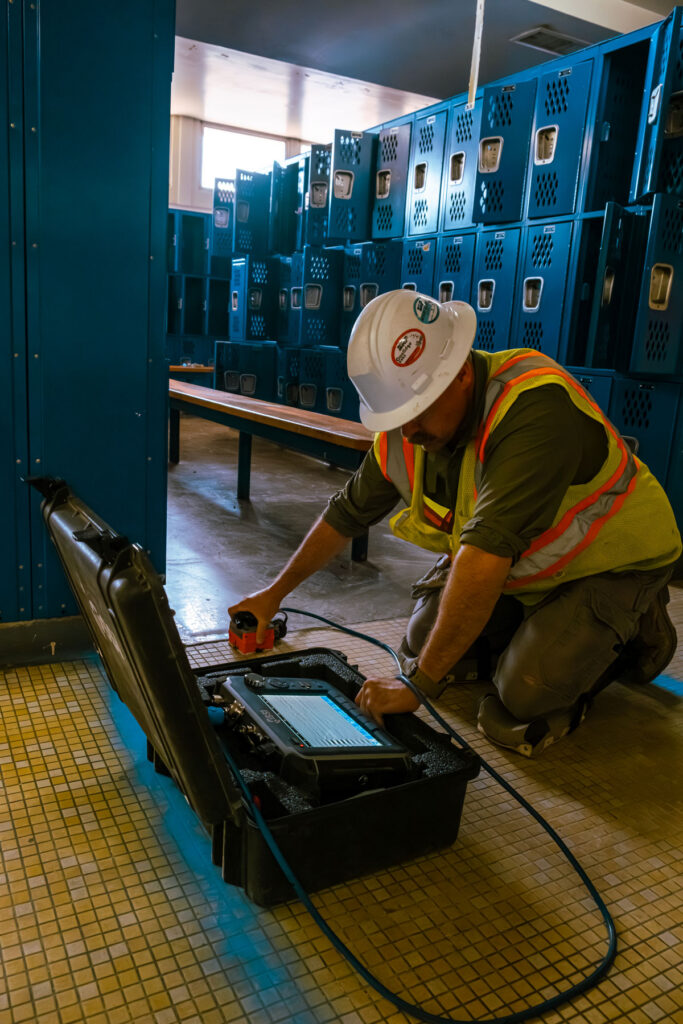
Next, technicians complete multiple passes over the concrete to collect accurate data. They interpret results in real time to identify embedded objects and their depths.
Mark Safe Drilling Zones
Finally, technicians mark all detected elements directly on the surface. They clearly define safe drilling areas and restricted zones so crews can proceed confidently.
Who Needs Concrete Scanning?
Concrete scanning benefits any project involving drilling, cutting, or anchoring into concrete. Typical users include:
- General contractors
- Concrete coring and cutting crews
- MEP contractors
- Structural engineers
- Facility managers
- Property owners
Whether you need a single core hole or multiple penetrations, scanning ensures safe execution from the start.
The Cost of Skipping Concrete Scanning
Skipping concrete scanning often leads to preventable (and expensive) problems.
For instance, cutting rebar may require structural repairs, striking utilities can shut down operations, damaging PT cables can trigger an emergency response, and liability.
Additionally, repairs, delays, and downtime can quickly exceed the cost of scanning. In many cases, identifying hazards early prevents thousands of dollars in rework and schedule impacts.
Therefore, scanning is not an extra step; it is a critical investment in risk prevention.
Best Practices for Safe Core Drilling After Scanning
Even after scanning, proper drilling practices remain essential. To maximize safety and accuracy:
- Always review scan markings before drilling
- Consider both the location and the depth of embedded objects
- Maintain clear communication between technicians and drill operators
- Consult a structural engineer when drilling near PT cables
- Stop work immediately if conditions are unclear
Most importantly, never drill into concrete unless hazards have been clearly identified and avoided.
Conclusion: Concrete Scanning Makes Core Drilling Safer
Concrete scanning transforms core drilling from a high-risk task into a controlled, precise process. By identifying rebar, post-tension cables, and hidden utilities in advance, scanning allows crews to protect workers, preserve structural integrity, avoid costly damage, and stay on schedule. As a result, teams can move forward with confidence and significantly reduce risk on every project.
In modern construction, concrete scanning is not optional; it is essential.

Drill Confidently, Scan First!
Before you core drill, make sure you know what’s inside the concrete. Concrete scanning gives your team the clarity needed to work safely, efficiently, and without costly surprises.
Schedule your concrete scan today and eliminate the risk before you drill.