Understanding Red Utility Markings Before You Dig
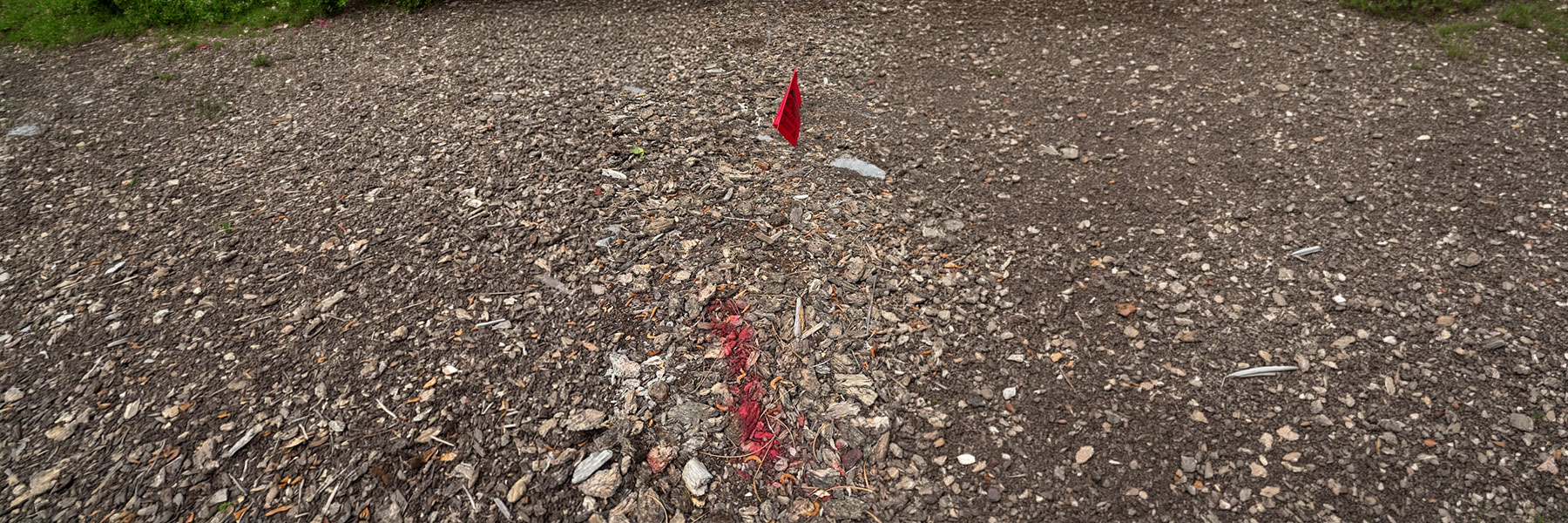
If you’ve ever seen red paint lines, red flags, or red symbols on the ground before a construction project, landscaping job, or excavation activity, you may have wondered what they mean. You may have noticed these markings along roadsides, on commercial properties, or even in your own front yard after utility crews visited the area. While they may seem like simple paint marks, they serve an important purpose: helping identify buried utilities before any digging begins.
The answer is simple but critically important: red utility markings indicate underground electrical infrastructure. These markings warn contractors, excavators, utility crews, and property owners that buried power lines or electrical conduits exist below the surface. Striking one of these utilities can result in severe injuries, widespread power outages, costly repairs, project delays, and even fatalities.
At Safe Site LLC, we help contractors, municipalities, engineers, utility owners, and facility managers locate and verify underground utilities every day. Through utility locating, subsurface utility engineering (SUE), utility mapping, GPR scanning, and vacuum excavation services, we regularly encounter red-marked utilities that require additional investigation before excavation begins.
This guide explains everything you need to know about red utility markings, including what they represent, the rules of digging around them, and best practices for working safely around underground electrical infrastructure.
What Does Red Utility Paint Mean?
According to the American Public Works Association (APWA) Uniform Color Code, red markings identify electrical infrastructure. Across the United States, utility locators use red paint, flags, stakes, and symbols to indicate the approximate location of these underground facilities.
When you see red markings on a job site, you should immediately recognize that high-risk electrical hazards may exist beneath the surface.
While red indicates electrical lines, it is part of a larger color-coded system used to prevent utility damage. Seeing how red fits into the broader picture helps crews stay aware of all potential hazards on a site:
| Meaning of Utility Marking Colors Meaning | |
|---|---|
|
Red |
Electric Power Lines, Cables, Conduit & Lighting Cables |
|
Yellow |
Gas Oil, Steam, Petroleum or Gaseous Materials |
|
Orange |
Communications, Cable TV, Alarm or Signal Lines, Cables or Conduit |
|
Green |
Sewers and Drain Lines |
|
Purple |
Reclaimed Water, Irrigation and Slurry Lines |
|
Pink |
Temporary Survey Markings |
|
White |
Proposed Excavation |
How Do Those Markings Get There? The 811 System
Before any digging project begins (whether it is a major commercial excavation or a simple residential fence installation), the law requires a call to 811, the national “Call Before You Dig” framework.
When a contractor or property owner contacts 811, public utility companies send professional locators to mark the approximate location of their underground lines using the APWA color codes.
However, it is critical to remember that 811 locators only mark public utilities. Privately owned electrical systems, such as lines running to an outdoor building, detached garage, parking lot lighting, or private facility infrastructure, will not be marked by 811 and require private utility locating services.
Why Red Markings Are Among the Most Critical Utility Colors
Every underground utility deserves respect. However, electrical infrastructure presents unique risks because danger exists even without direct contact. For example, an excavator bucket that strikes an energized cable can create electrical arcing, severe burns, electrocution hazards, equipment damage, and emergency response situations.
Unlike water or communication lines marked in blue, electrical facilities can injure or kill workers instantly. As a result, excavation near red markings requires strict adherence to specialized safety procedures.
Critical Rules: The Tolerance Zone and Ticket Expiration
Understanding what the red paint means is only the first step. You must also understand the legal restrictions surrounding those marks.
Respecting the Tolerance Zone
Utility paint lines indicate an approximate horizontal location, not an exact position. Because of this, every state enforces a Tolerance Zone (often called the Hand Dig Zone). Typically, this zone spans 18 to 24 inches on either side of the outer edge of the marked utility. Within this boundary, the use of mechanized excavation equipment is strictly prohibited until the underground utility has been visually exposed and verified using safe, non-destructive methods like hand digging or vacuum excavation.
Remember That Markings Expire
Utility flags and paint markings do not last forever, and neither do the legal permits associated with them. Depending on your state's regulations, 811 locate tickets expire after 15 to 30 days. If your project is delayed, or if weather, heavy traffic, or construction activities destroy the red markings, you must stop digging and submit a locate renewal request. Digging on an expired ticket removes your legal liability protections and significantly increases safety risks.
What Types of Utilities Are Marked in Red?
Many people assume red markings only indicate high-voltage power lines. In reality, several types of electrical infrastructure may be present:
- Primary Power Distribution Lines: High-voltage lines that deliver electricity throughout communities. Damage to a primary line can affect thousands of customers simultaneously.
- Secondary Electrical Service Lines: These utilities connect local transformers to buildings, facilities, and residences. Although smaller, they still present significant safety hazards.
- Street Lighting Systems: Municipal lighting circuits frequently run alongside roads, parking lots, sidewalks, and public spaces.
- Traffic Signal Infrastructure: Electrical wiring for traffic signals, pedestrian crossings, and transportation systems.
- Private Electrical Systems: Many industrial facilities, manufacturing plants, hospitals, universities, data centers, and commercial campuses maintain private electrical infrastructure that does not appear on public utility records.
In Case of Emergency: If an Electrical Line is Struck
Although utility companies and contractors take extensive precautions before excavation begins, accidental utility strikes can still occur. If a crew damages an underground electrical line, they must immediately stop working, secure the area, and notify the utility owner. Emergency response teams and utility personnel will then assess the situation, isolate the damaged line if necessary, and perform the required repairs before work can safely resume.
Depending on the severity of the damage, an electrical utility strike can cause power outages, project delays, safety hazards, and costly repairs. This is why proper utility locating, utility mapping, and vacuum excavation are critical steps before any digging takes place.
At Safe Site, safety is always our top priority. We use diversified technical and advanced equipment to help our clients reduce risk, prevent utility strikes, and protect people and critical infrastructure before excavation begins.
A Real-World Example: How Red Markings Prevent Costly Damage
Imagine a contractor preparing to install a new fence around a commercial property. The crew plans to drill post holes and begin installation immediately. However, after utility locates are completed, several red paint markings appear along the fence alignment.
Further investigation reveals an underground electrical feeder supplying power to a nearby office building. Without those red markings, the auger could have struck the cable directly. The result could have included worker injuries, building power loss, emergency repairs, and massive utility damage claims.
Instead, the contractor adjusts the fence alignment and uses vacuum excavation to safely expose the utility before proceeding. A delay of a few hours prevents a potentially catastrophic incident.
How Safe Site LLC Verifies Red-Marked Utilities
Because surface paint is only an approximation, professional excavation projects rely on advanced verification technologies. At Safe Site LLC, we combine multiple methods and services to maximize job site safety:
Utility Locating: Electromagnetic locating equipment helps identify conductive electrical utilities and trace their precise horizontal path.
Ground Penetrating Radar (GPR): GPR can identify non-conductive conduits, concrete-encased duct banks, and additional subsurface features that traditional locating equipment may miss.
Subsurface Utility Engineering (SUE): SUE combines records research, field investigations, surveying, and utility mapping to provide a complete, highly accurate map of underground infrastructure.
Vacuum Excavation (Daylighting): This non-destructive process uses pressurized air or water and a powerful vacuum to safely remove soil, allowing crews to visually confirm the exact depth, alignment, and size of electrical facilities without risking a utility strike.
Common Mistakes Contractors Make Around Red Markings
Even experienced crews occasionally make assumptions that increase risk on a job site:
- Assuming Paint Is Exact: Believing the utility is directly beneath the paint line rather than managing the entire Tolerance Zone.
- Ignoring Private Utilities: Relying solely on public 811 locates and failing to sweep for privately owned electrical systems.
- Skipping Visual Verification: Relying purely on surface marks and moving straight to heavy mechanical equipment without daylighting the line first.
- Digging on Expired Marks: Proceeding with work after paint lines have faded or the legal locate ticket has expired.
Final Thoughts
Red utility markings are far more than paint on the ground; they are vital visual warnings that protect lives and infrastructure. Before digging near red markings, project teams must recognize the associated risks, respect the statutory tolerance zones, and utilize professional verification whenever necessary.
The safest excavation projects never rely on assumptions. They rely on accurate data, professional utility locating, and proven damage prevention practices. When electrical utilities are involved, knowing exactly what’s below the surface makes the difference between a successful project and a catastrophic utility strike.

Protect Your Project: Partner with Safe Site
Red paint lines and utility flags are an invaluable warning, but they only give you part of the picture. When you are dealing with buried electrical infrastructure, guessing isn’t just expensive, it’s incredibly dangerous.
Partner with Safe Site LLC. Keep your crew safe, your project on schedule, and your peace of mind intact.
Trust the subsurface experts. Contact us!