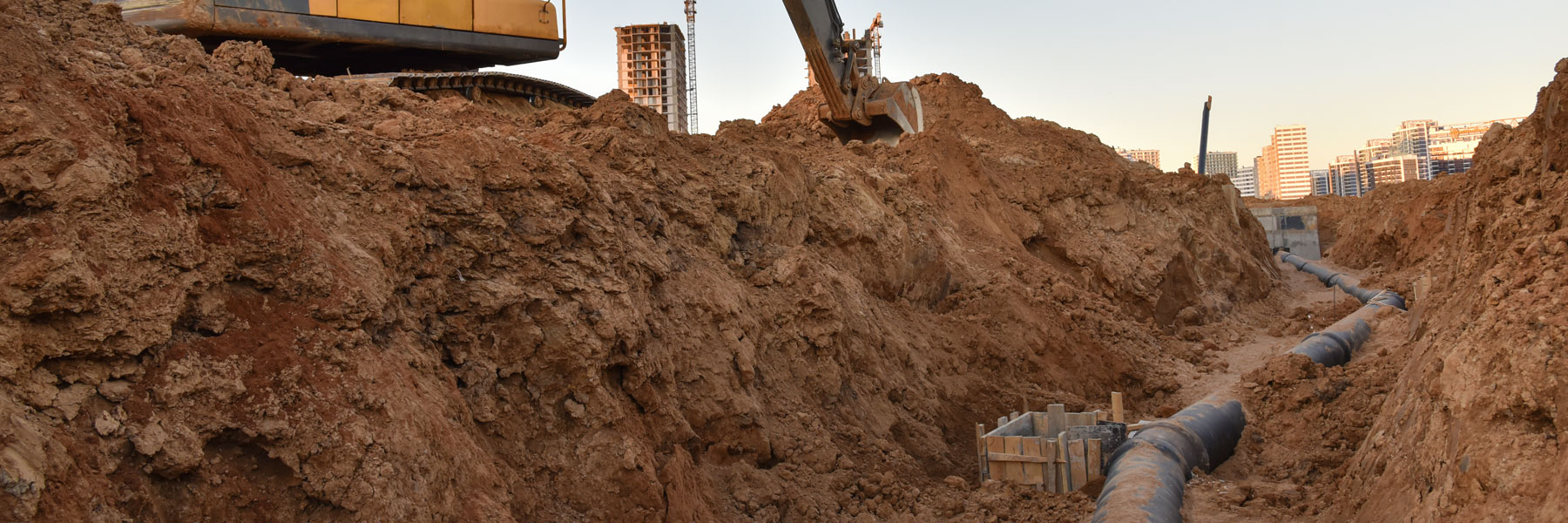
In most U.S. cities, such as Denver, Austin, Charlotte, and Colorado Springs, utility lines are typically buried at the following depths:
- Gas lines: 1.5 to 3 feet (18–36 inches) for residential lines, and up to 4 to 6 feet for transmission lines
- Electric lines: 1.5 to 4 feet, depending on voltage and installation type
- Water lines: 3 to 6 feet to prevent freezing and maintain pressure
- Sewer lines: 4 to 8 feet due to gravity-flow requirements
- Telecom/fiber lines: 1 to 3 feet (12–36 inches), usually the shallowest
These ranges represent typical installation standards, but actual depths vary based on soil conditions, local codes, and prior underground work.
Why Utility Line Depths Vary by Location
Utility line depth is never universal because multiple factors influence installation across cities like Denver, Austin, Charlotte, and Raleigh.
Local Codes and City Regulations
Local building codes determine minimum burial depths, and these standards vary between states and municipalities. For example, residential utilities in Denver may require different minimum depths than similar installations in Austin or Charlotte.
Soil and Environmental Conditions
Soil conditions also affect depth. Rocky terrain in Colorado Springs often pushes installations deeper, while clay-heavy soil in Texas and shifting ground in North Carolina can force crews to adjust depth between roughly 1.5 and 6 feet, depending on the utility type.
Infrastructure Age and Urban Growth
Older neighborhoods often contain layered infrastructure installed over decades. In cities like Charlotte and Denver, utilities may exist at multiple depths, ranging from shallow telecom lines at 1–2 feet to deeper sewer systems at 6–8 feet.
How Deep Gas Lines Are Typically Buried
Gas line depth varies depending on whether the system serves homes, neighborhoods, or long-distance transmission.
Residential Gas Lines (1.5 to 3 feet)
Installers typically place residential gas service lines at 1.5 to 3 feet deep. This range allows efficient connection to homes while maintaining basic protection from surface activity.
Distribution Gas Lines (2 to 4 feet)
Main distribution lines usually sit deeper, between 2 and 4 feet, to reduce exposure to traffic, landscaping, and construction activity. In growing cities like Austin and Denver, these lines often vary due to ongoing upgrades.
Transmission Gas Lines (4 to 6+ feet)
High-pressure transmission lines typically run between 4 and 6 feet deep or more. This deeper placement improves stability and reduces risk across long-distance networks.
In colder regions such as northern Colorado, installers often increase depth to protect against frost movement, which can push installations beyond standard ranges.
How Deep Electrical Lines Are Buried
Electrical utilities vary widely in depth depending on voltage and system design.
Residential Electrical Lines (1.5 to 2 feet)
Low-voltage residential electrical lines are often installed at 1.5 to 2 feet deep to simplify installation and maintenance in neighborhoods.
Distribution Electrical Lines (2 to 4 feet)
Primary distribution lines typically range from 2 to 4 feet deep, especially in urban areas like Dallas, Charlotte, and Denver, where safety and load capacity are higher priorities.
High-Voltage Systems (3 to 4+ feet)
High-voltage electrical systems may be installed at 3 to 4 feet or deeper, or placed in conduit systems for added protection and long-term reliability.
Because utilities are frequently upgraded in fast-growing regions like Raleigh and Denver, crews often encounter inconsistent electrical line depths during excavation.
How Deep Water and Sewer Lines Are Buried
Water Lines (3 to 6 feet)
Water lines are typically buried between 3 and 6 feet deep to prevent freezing, maintain pressure, and protect against surface disruption in both urban and suburban systems.
Sewer Lines (4 to 8 feet)
Sewer lines usually sit between 4 and 8 feet deep because they rely on gravity flow. In cities with elevation changes like Colorado Springs or Raleigh, depth can vary even more significantly across short distances.
How Deep Telecommunications and Fiber Lines Are Buried
Telecom and fiber optic systems remain the shallowest utilities in most underground networks.
Installers usually place these lines between 1 and 3 feet below the surface to balance protection with accessibility for maintenance and upgrades. Because multiple providers expand networks over time, cities such as Austin, Denver, and Charlotte often show inconsistent telecom depths even within short distances.
Why 811 Marking Does Not Guarantee Safety
Although the law requires calling 811 before digging in states like Colorado, Texas, and North Carolina, the system only identifies public utilities. Private systems often remain unmarked, including irrigation lines, privately installed electrical systems, and secondary service connections. These hidden utilities can exist anywhere from shallow depths around 1.5 feet to deeper installations exceeding 8 feet.
In rapidly developing cities such as Denver, Austin, and Charlotte, this gap creates significant excavation risk if relied upon alone.
How Professional Utility Locating Reduces Risk
Advanced locating services provide a far more accurate picture of underground conditions than standard marking systems. Technicians combine electromagnetic detection with ground-penetrating radar to identify both shallow and deep utilities, often ranging from 1 foot to over 8 feet in depth. This process reveals exact positions, identifies unknown lines, and improves excavation safety in complex environments.
Cities experiencing rapid infrastructure growth, including Colorado Springs, Dallas, and Raleigh, particularly benefit from this level of precision.
How Underground Utilities Are Located in Practice
Before excavation begins, technicians scan job sites using multiple technologies to map underground systems. They trace signals, cross-check utility records, and apply subsurface scanning to build an accurate underground profile across varying depths.
This process becomes essential in areas where decades of construction have layered utilities at different levels, often ranging from shallow telecom lines to deep sewer systems.
Final Thoughts
General depth ranges provide helpful guidance, yet they cannot replace real-world verification. Underground infrastructure varies significantly (from shallow fiber lines at 1 foot to sewer systems reaching 8 feet) especially in rapidly growing cities like Denver, Austin, Charlotte, and beyond.
Every excavation project should include professional locating to prevent damage, reduce risk, and ensure safe operations.
FAQ: Utility Line Depth and Safety
How do I know if I actually need professional utility locating?
You need utility locating anytime your project involves breaking ground, even for shallow work like grading, fencing, or landscaping. If there is any uncertainty about past excavation or underground additions, relying only on surface markings increases risk.
What’s the biggest risk if something underground is missed?
The biggest risk is not just damage but also project disruption. A missed utility can force immediate work stoppage, trigger emergency repairs, and delay inspections or permitting. On commercial sites, it can also create liability issues between contractors, engineers, and property owners.
How early should I book utility locating before starting work?
You should schedule locating as soon as your project layout is confirmed. Waiting until excavation begins reduces flexibility and can force costly redesigns or delays if underground conflicts are discovered late. Call Us now for a free quote!
Can utility locating help with project planning, not just safety?
Yes. Many contractors use locating results during pre-construction planning to adjust trench routes, optimize utility crossings, and avoid redesigns. It helps teams make informed decisions before equipment arrives on site.

Need to Know Exactly What’s Underground Before You Dig?
Before excavation begins, verifying underground conditions helps eliminate uncertainty and reduce costly surprises during construction. Safe Site provides professional utility locating and subsurface scanning designed to support contractors, engineers, and developers at every stage of a project.
Schedule your utility locating service today to reduce risk before you dig.