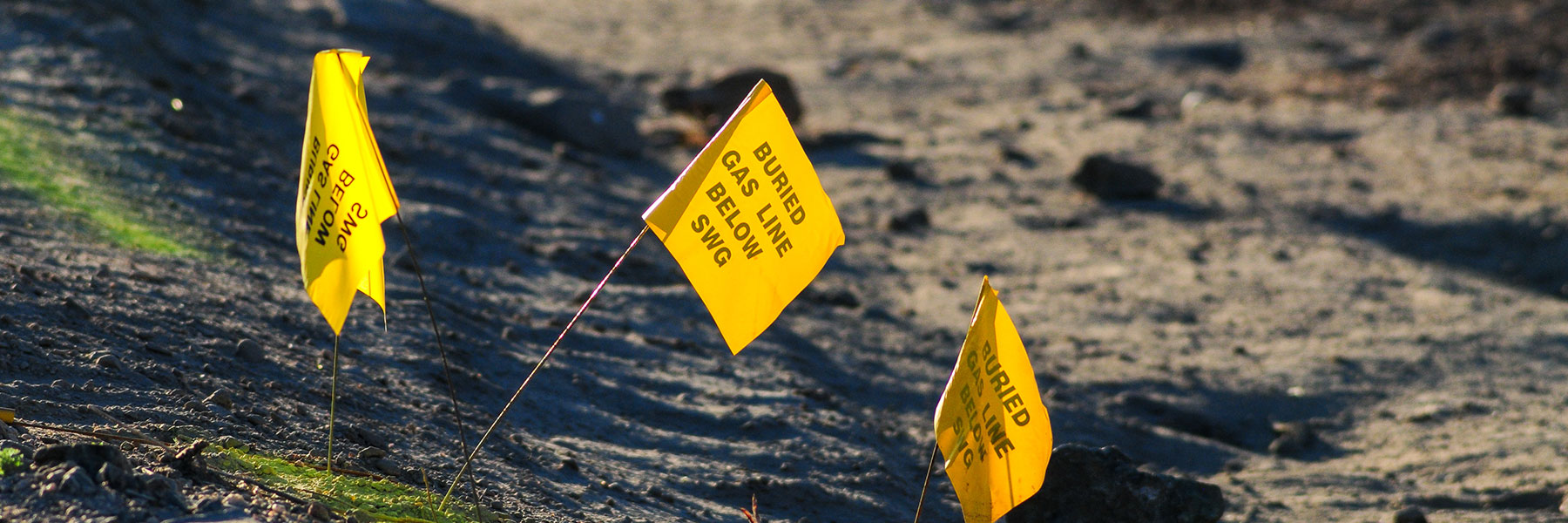
If you’ve ever noticed yellow paint, flags, or stakes on the ground near a construction project, you may have wondered what they represent. These bright yellow utility markings are more than just temporary paint; they indicate the location of underground gas, oil, steam, petroleum, or other gaseous materials that require extra caution during excavation.
Whether you’re a contractor, municipality, utility owner, property developer, homeowner, or just a curious person, understanding the meaning of yellow utility markings is essential for preventing utility strikes, protecting workers, and keeping projects on schedule.
What Do Yellow Utility Markings Mean?
A Safety Warning Before Excavation
Yellow utility markings are the standard used across the United States to identify underground gas, oil, steam, petroleum, and other gaseous utility lines. Before excavation begins, utility locating professionals use yellow paint, flags, or stakes to mark the approximate horizontal path of these underground facilities.
These markings serve as a critical warning for excavation crews, helping them recognize areas where additional caution is required. However, they do not show the exact depth or precise location of a buried utility. Contractors must always verify utility locations and follow safe digging practices before starting work.
Damaging an underground gas or pressurized utility line can create serious safety risks, project delays, and costly consequences. A utility strike may result in:
- Gas leaks
- Fires or explosions
- Environmental damage
- Emergency response situations
- Expensive repairs and regulatory penalties
By understanding yellow utility markings and respecting their warning, contractors can help protect workers, the public, and essential infrastructure.
Yellow markings may identify a variety of underground systems, including:
- Natural gas distribution lines
- High-pressure transmission pipelines
- Propane lines
- Petroleum pipelines
- Steam systems
- Compressed air systems
- Other gaseous utility infrastructure
Because underground utilities vary by location, every yellow marking should be treated as a potential hazard. While these markings provide important guidance, they are only an initial indication of where a utility may be located. Proper utility verification methods, such as utility locating, subsurface utility engineering (SUE), or vacuum excavation, help confirm the position of buried infrastructure and reduce the risk of damage during excavation.
Meaning of Yellow Paint, Flags and Stakes
Utility locators use several types of yellow markers depending on the surface and project requirements.
Yellow paint
Yellow spray paint is commonly applied to pavement, sidewalks, gravel, or dirt to outline the approximate route of underground utilities.
Yellow flag
Small yellow flags are often used on lawns, landscaped areas, or soft ground where paint may be less visible or undesirable.
Yellow stakes
Wooden or fiberglass stakes with yellow markings may identify important utility points, changes in direction, or connection locations. Each marking serves the same purpose: alerting anyone working nearby to underground infrastructure.
Techniques used before excavation near gas lines
Professional Utility locating
One of the biggest misconceptions is that utility markings identify the exact location of buried utilities.
In reality, yellow markings represent the approximate horizontal position of the underground facility. Factors such as soil movement, previous construction, installation methods, and utility depth can all affect the actual location. For this reason, excavation should always proceed carefully using safe digging practices and, when necessary, non-destructive excavation methods.
For this reason, professional utility locating is still necessary.
Although utility markings are an essential safety measure, they are only part of the process. Private utility locating services can identify underground infrastructure that public utility locating programs may not mark, including private gas lines, utility connections beyond the meter, industrial facilities, campus utilities, commercial site utilities, and abandoned utilities like 811.
Many costly utility strikes occur because private underground utilities were never identified before excavation began.
Utility Mapping for a Complete Underground Picture
Once underground utilities have been accurately located, utility mapping transforms that information into detailed, easy-to-use records. By combining field data with GPS technology and digital mapping tools, utility mapping documents the location of underground infrastructure for current and future projects.
Accurate utility maps help engineers, contractors, municipalities, and facility owners plan excavations more efficiently, reduce conflicts during construction, improve asset management, and minimize the risk of damaging buried utilities. Keeping utility records up to date also supports future maintenance, repairs, and expansion projects.
Ground Penetrating Radar Improves Accuracy
Ground Penetrating Radar (GPR) adds another layer of confidence during utility investigations.
Unlike traditional electromagnetic locating alone, GPR can help detect:
- Non-metallic gas lines
- Plastic utilities
- Unknown underground structures
- Congested utility corridors
- Previously undocumented utilities
Combining GPR with electromagnetic locating often provides the most complete understanding of underground conditions.
Hydrovac Excavation Safely Verifies Yellow Markings
When excavation must occur near yellow utility markings, many contractors use hydrovac excavation to expose underground infrastructure safely.
Hydrovac systems use pressurized water to loosen soil while a vacuum removes the debris. This non-destructive process allows crews to confirm utility locations before heavy equipment begins digging visually.
Benefits include:
- Reduced risk of utility damage
- Improved worker safety
- Faster verification
- Less surface disruption
- Greater excavation accuracy
Why Understanding Yellow Utility Markings Is Essential
Knowing what yellow utility markings mean can help prevent serious accidents and costly project disruptions. These markings alert contractors, engineers, municipalities, and property owners to the presence of underground gas, oil, steam, or petroleum lines that require special care during excavation.
When combined with professional utility locating, Ground Penetrating Radar (GPR), and hydrovac excavation, yellow markings become an essential part of a comprehensive damage prevention strategy. Proper planning helps protect underground infrastructure, keeps workers safe, and ensures projects stay on schedule.
Utility Color Codes Every Contractor Should Know
In addition to yellow markings, other standardized utility colors are used to identify different types of underground infrastructure. Knowing what each color represents helps crews work more safely.
| Color | Utility Type |
|---|---|
|
White |
Proposed excavation area |
|
Pink |
Temporary survey markings |
|
Yellow |
Gas, oil, steam, petroleum, and gaseous materials |
|
Orange |
Communications, fiber optic, telephone, and cable TV |
|
Purple |
Reclaimed water, irrigation, and slurry lines |
|
Green |
Sewer and drain lines |
Best Practices When You See Yellow Markings
If a contractors and your project involves excavation near yellow utility markings:
- Review all site markings before work begins.
- Maintain clear visibility of utility markings throughout the project.
- Use professional utility locating and utility mapping when additional verification is needed.
- Consider Ground Penetrating Radar for complex sites.
- Verify critical crossings with hydrovac excavation.
- Follow safe excavation practices at all times.
- Stop work immediately if unexpected utilities are encountered.
These steps help reduce the risk of damage while improving project efficiency.
Final Thoughts
Yellow utility markings are one of the most recognizable signs on any construction site, but they represent much more than paint on the ground. They identify underground gas, petroleum, steam, and other hazardous utilities that require careful planning before excavation.
Understanding what yellow markings mean (and recognizing their limitations) helps contractors, municipalities, engineers, and developers make safer decisions. By combining professional utility locating, Ground Penetrating Radar, hydrovac excavation, and accurate utility mapping, project teams can significantly reduce the risk of utility strikes while keeping projects moving safely and efficiently.
Need Accurate Underground Utility Locating?
Before your next excavation project, partner with experienced utility locating professionals who use advanced technologies such as electromagnetic locating, Ground Penetrating Radar (GPR), hydrovac verification, and utility mapping to help identify underground infrastructure with confidence. Contact Safe Site today to schedule a utility locating assessment and keep your project safe from the ground up.